The Silent Atrocity: Gender-Based Violence in Ethiopia’s Forgotten War

In the hills and villages of Ethiopia’s Amhara region, a war is being waged not only with guns and drones, but against the bodies of women and girls. A peer-reviewed study published in the Advances in Social Sciences Research Journal by Gothenburg University professor Girma Berhanu documents an escalating pattern of sexual and gender-based violence so extreme it may constitute crimes against humanity under international law, yet the world has largely looked away.
The atrocities described are not the incidental cruelties of warfare. They are systematic. Verified testimonies detail forced breast amputation, rape accompanied by stabbing and burning, insertion of foreign objects, genital mutilation, and the public display of mutilated bodies, acts designed not merely to harm individual victims, but to terrorize entire communities, fracture social bonds, and erase collective identity.
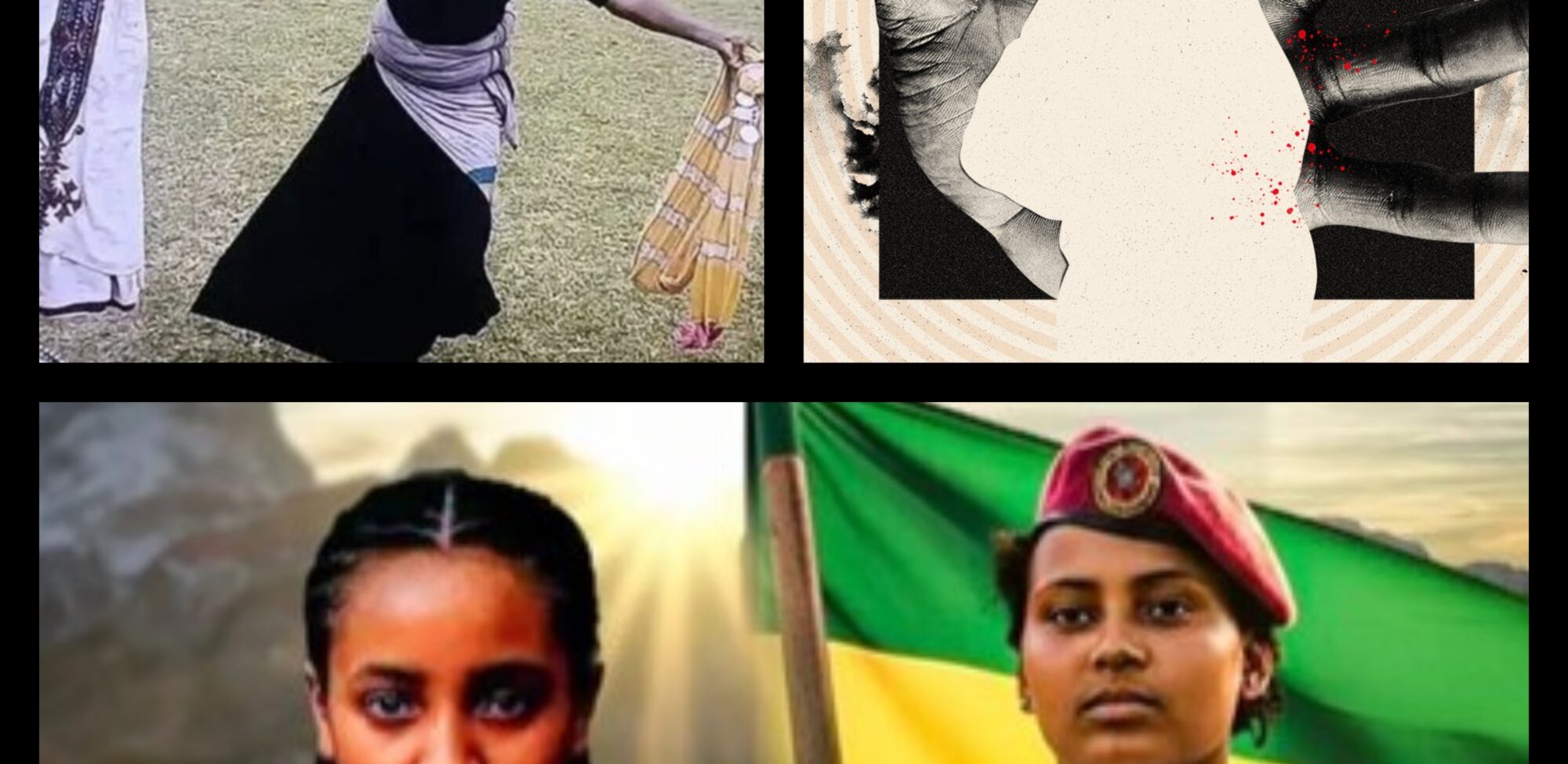
Among the most haunting cases is that of Bealem Wasse, a 19-year-old who had joined the Fano resistance movement out of despair at the violence consuming her people. Captured as a wounded prisoner of war, she was not given medical treatment. Instead, her breast was severed and the skin bearing her “Amhara” tattoo was peeled away, a deliberate act of identity destruction. Her body was then put on public display. She was not a statistic. She was a young woman who loved dancing, aspired to study the arts and sciences, and asked, in the months before her death, “Where is God when my people suffer like this?”
Her story is not isolated. Three young girls from different parts of the Amhara region have been killed and mutilated in similar ways. The families of victims have reportedly been imprisoned and threatened into silence. In one documented case, a father was coerced into publicly denying that he had witnessed his own daughter’s injuries. Silencing the witnesses is itself part of the strategy.
To understand why such violence occurs, the paper draws on two powerful theoretical frameworks. Michel Foucault’s concept of biopolitics, the state’s regulation of life and population, meets Achille Mbembe’s darker counterpart, necropolitics: the political power to decide who may live and who must die. In Ethiopia, the paper argues, these forces operate simultaneously. The same state that builds infrastructure may also imprison, displace, or starve its own citizens. Certain populations, the research suggests, have been rendered disposable, reduced to what Mbembe calls “death-worlds.”
What makes this crisis all the more urgent is the silence surrounding it. International media coverage has been minimal. Global condemnation has been muted. While access limitations, collapsed health systems, and the active suppression of witnesses have made documentation difficult, the absence of large-scale data does not mean the violence is not happening. It means the barriers to bearing witness are deliberately high.
Sexual violence in conflict is never accidental. It is a weapon, one that targets womanhood, motherhood, and reproduction to destroy communities from within. As long as the world remains silent, that weapon continues to work.
The time for indifference is over. These women deserve witness, justice, and remembrance.
Sources
Primary Source: Berhanu, G. (2025). Women’s Bodies as Battlefields: Breast Amputation and Genital Mutilation in the Overlooked Genocidal Conflict in Ethiopia. Advances in Social Sciences Research Journal, 12(11), 227–236. https://doi.org/10.14738/assrj.1211.19657
Supporting Sources: BBC (November 2025). ‘It would have been better if they’d killed me’: A forgotten war destroying women’s lives. https://www.bbc.com/news/articles/cx2p8dpw1rwo
Mbembe, A. (2003). Necropolitics. Public Culture, 15(1), 11–40. https://doi.org/10.1215/08992363-15-1-11
Foucault, M. (1978). The History of Sexuality, Volume 1. Pantheon Books.
Berhanu, G. (2018). Rape and genital maiming/mutilation as a torture method in Ethiopian prisons. Advances in Social Sciences Research Journal, 5(10), 346–361.